
Policewoman Holding Radio on Patrol coloring page
A self-assured policewoman with a radio in her patrol. This colouring page is so good as its bold lines and plain details made it ideal among children who are community helper theme lovers.
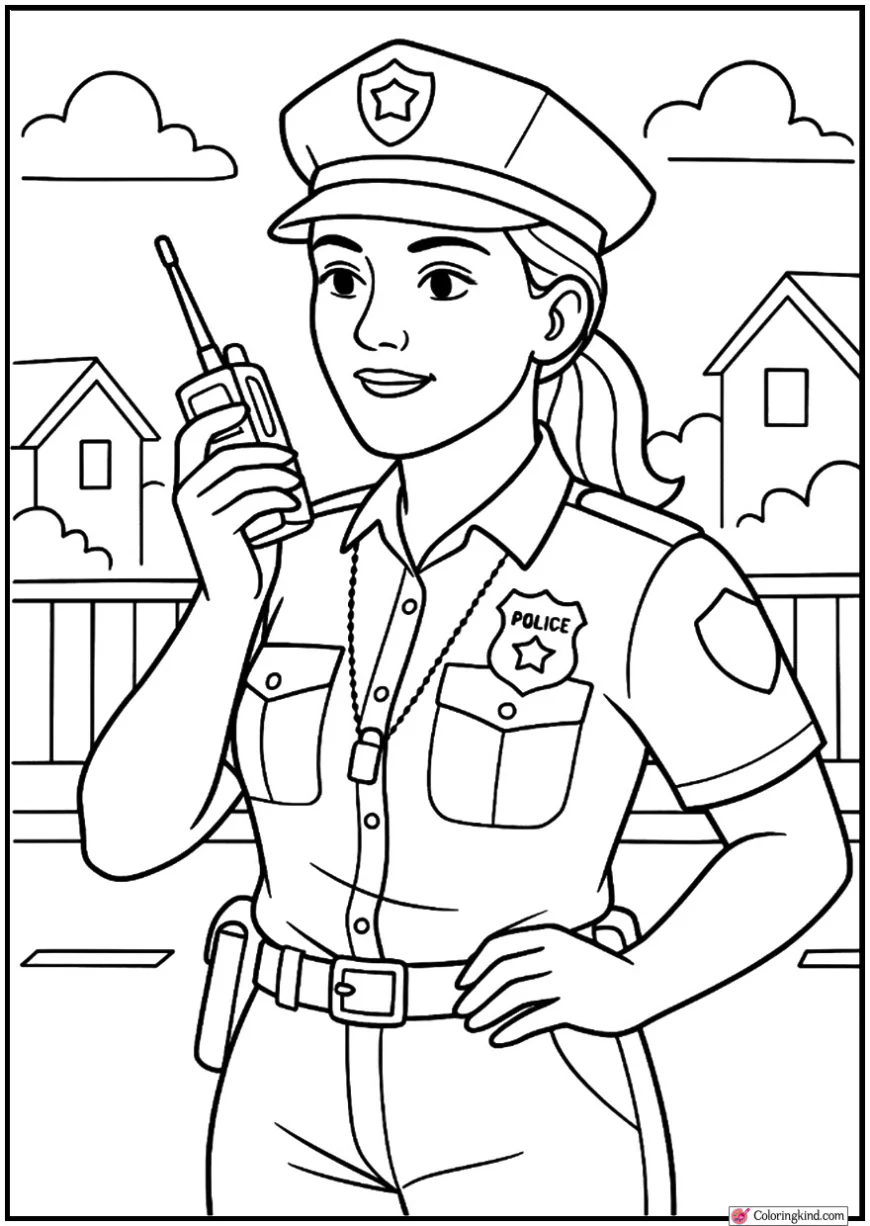
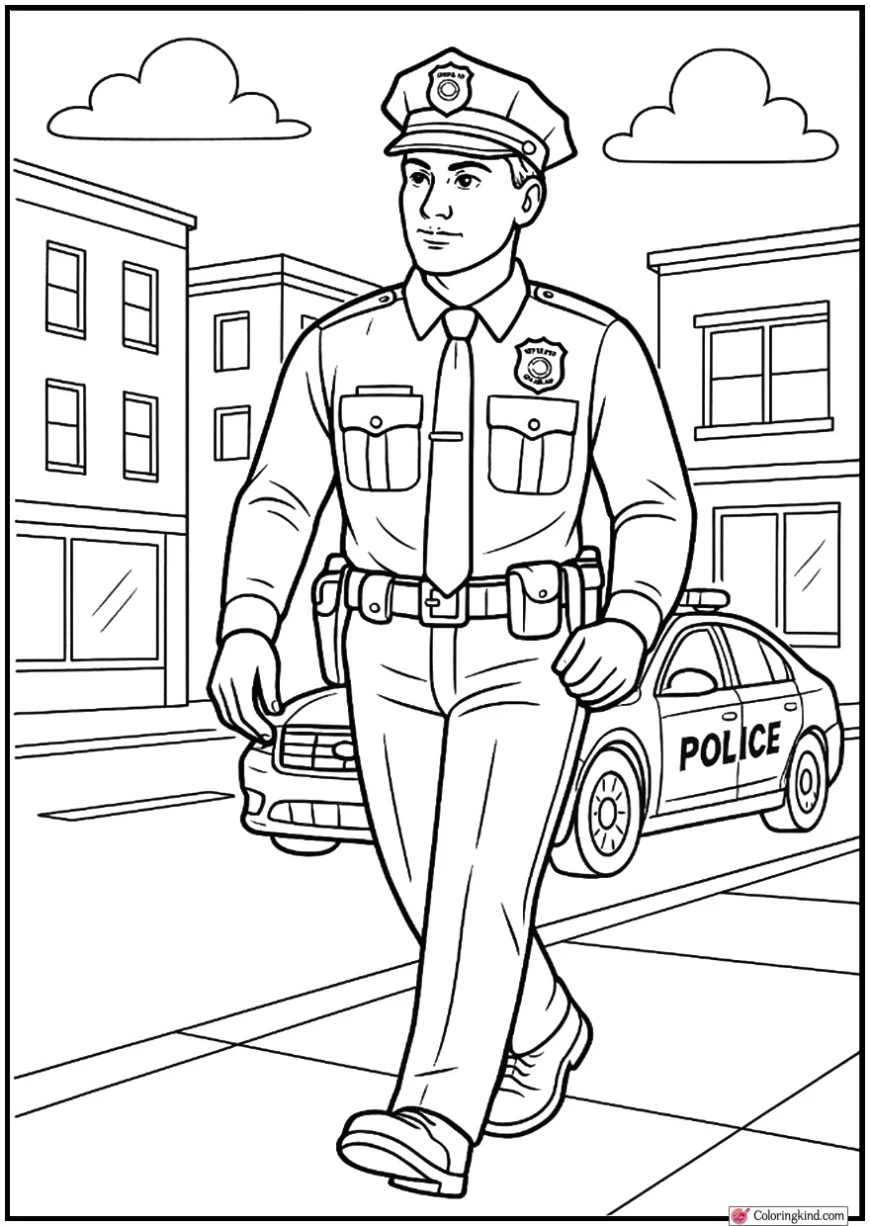
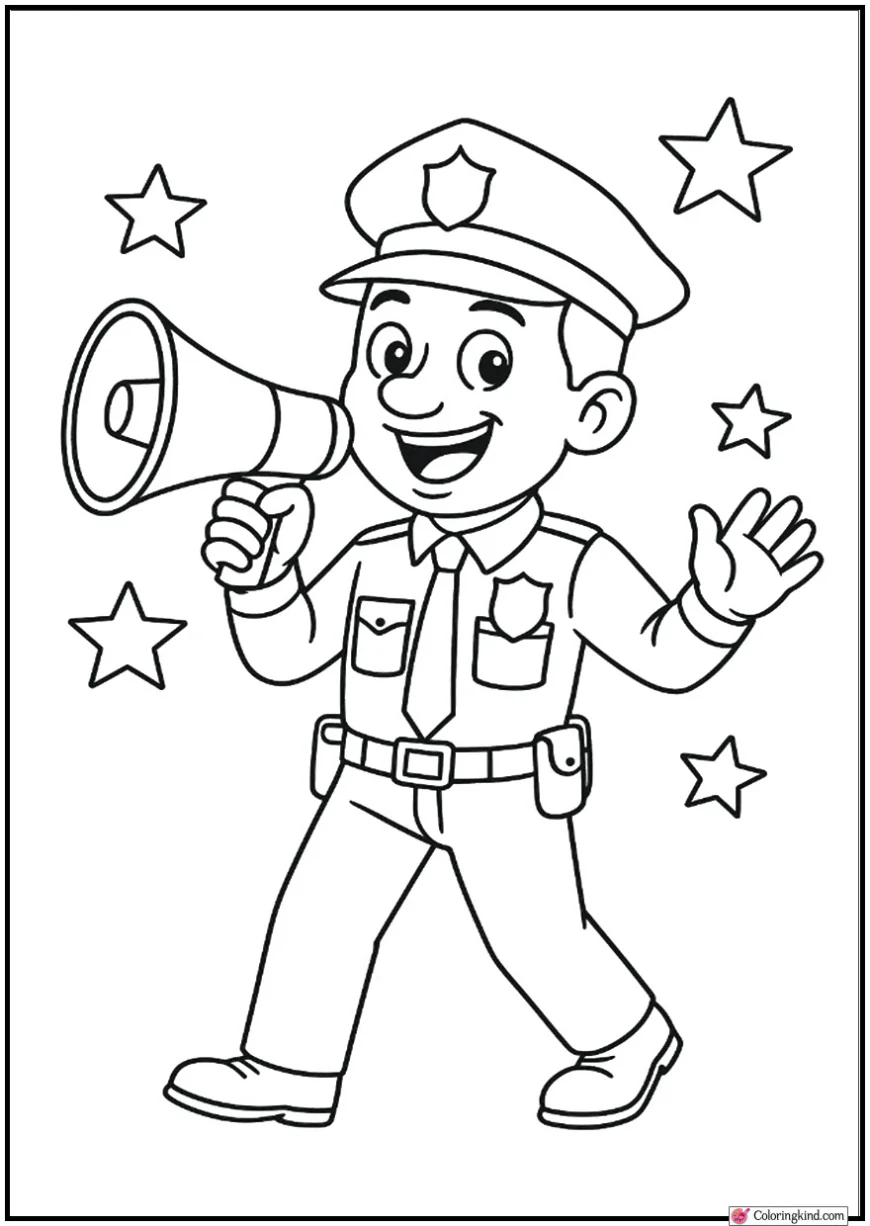
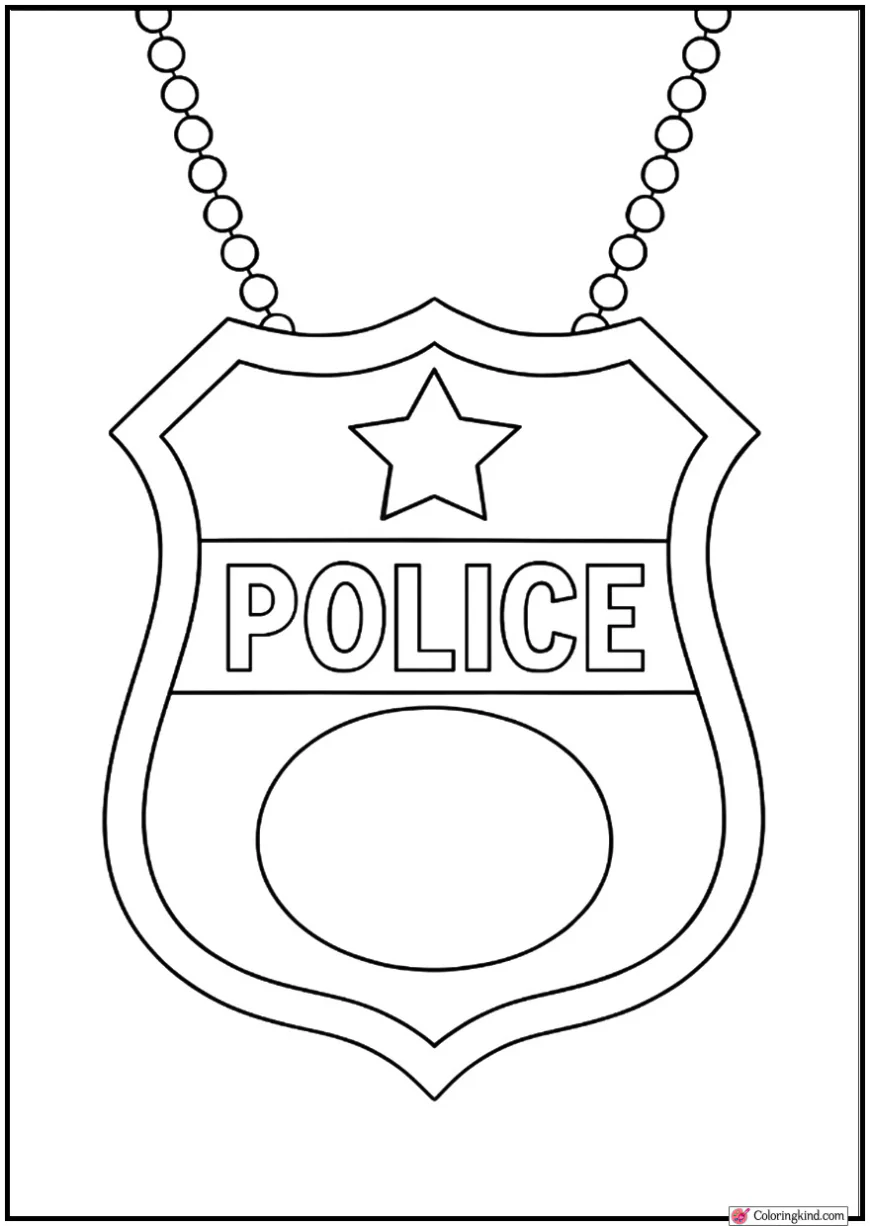
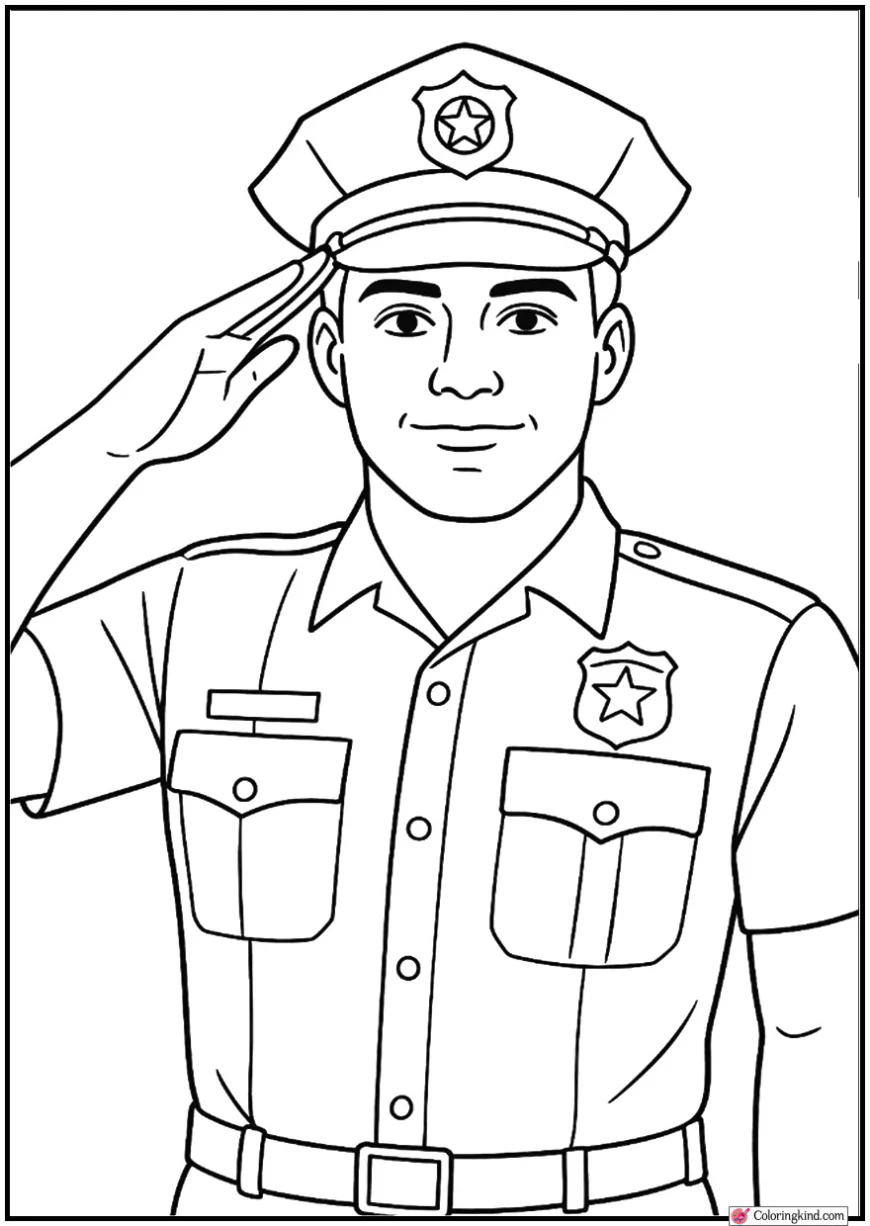
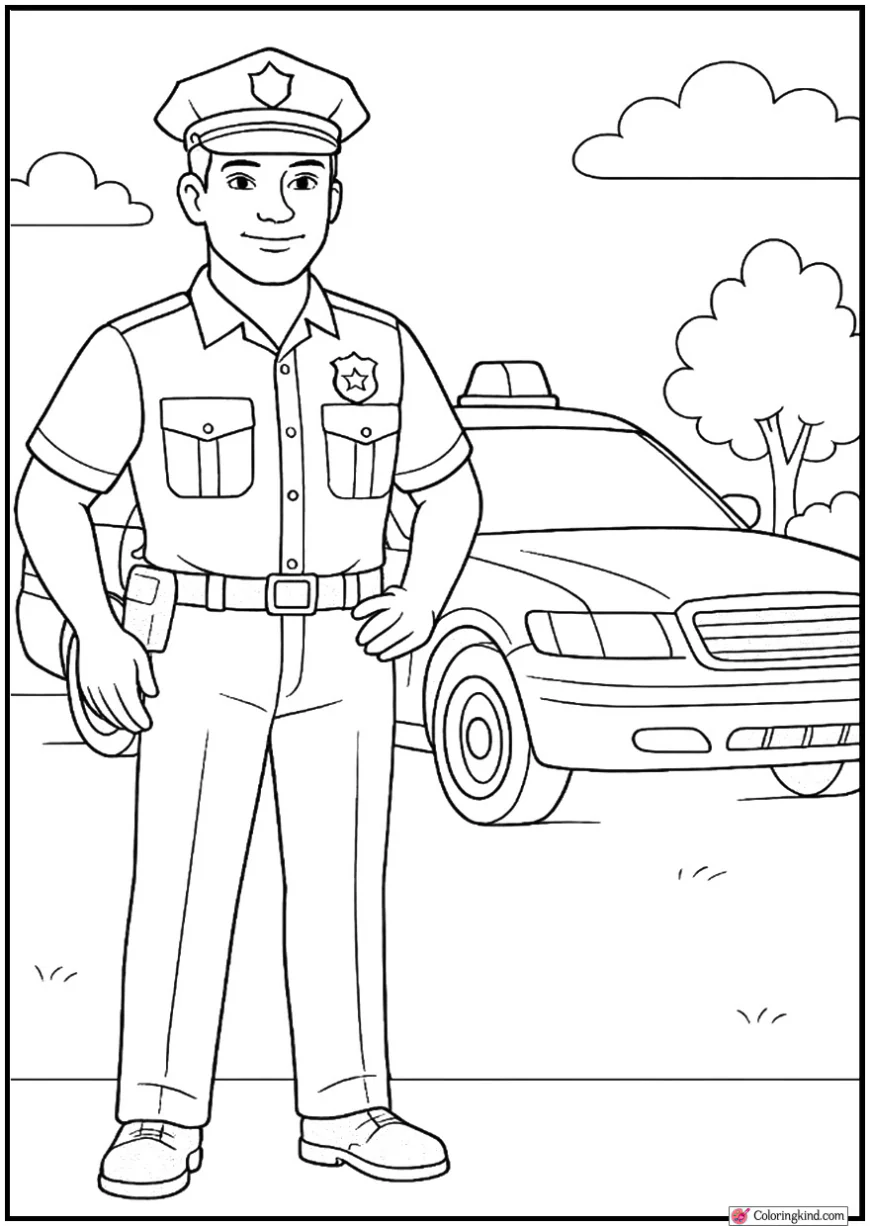
Even this colouring page, with its bold policewoman holding a radio during patrol, produces an empowering and exciting image of a young artist. The officer is drawn in vivid and refined lines that emphasise her uniform, badge, belt, and alert face as she is talking on her radio. Her position is professional and indicates a willingness to work with children and make them notice that police work is a duty and a collaboration. The plain background (usually with a sidewalk, a street, or bare minimum buildings) also maintains the attention on the officer and leaves the imaginative kids to create their own environment. This plan stimulates admiration towards community assistants and promotes creativity, storytelling, and development of fine motor abilities. The page (with big colouring areas and shapes that are easy to follow up) is both learner-friendly and suitable to older children that like to add in details. Having been utilized at home, in classrooms, or in themed art work, it is a great positive modern image of ladies as law enforcement officers.
✅ How to Color
The first thing is to paint the uniform of the policewoman in traditional colours, that is, in a tone of navy blue, black, or dark grey. Include badge details, buttons and belt equipment with yellow, gold or silver. Options skin and hair color Select natural skin, and hairstyle/color: black, brown, blonde, red, or funny cartoon. The radio is either black, grey, or dark blue with small bright buttons. When the background has been covered with buildings or pavement, the use of soft or light tones of brown or subtle colour is to be made so that the officer is the focus. Add green or grey on ground, add a sky of a light blue. Apply light colouring on uniform folds, belt straps and edges of radio to add depth. Children can also exclude some additional features such as passing vehicles, street lights or clouds to make the scene more personal.